We’ve all received that late-night call. A critical switch at the main office has gone offline, the retail store’s Wi-Fi is down, or remote employees can’t access a key resource.
In the traditional, on-premises world of network management, this meant a frantic drive to the office, logging into a command-line interface in a cold server room, and manually troubleshooting the issue. Managing a network was a highly reactive, location-dependent, and often fragmented task.
Each piece of hardware — from routers and switches to firewalls and access points — was its own island, requiring individual attention and on-site intervention. For any business with more than one location, this model was a recipe for inefficiency, high costs, and constant headaches.
Fortunately, the evolution of technology has provided a powerful solution to these age-old problems. Today, we are seeing a seismic shift away from hardware-centric, on-premises controllers to a more agile, intelligent, and efficient paradigm known as cloud-based network management.
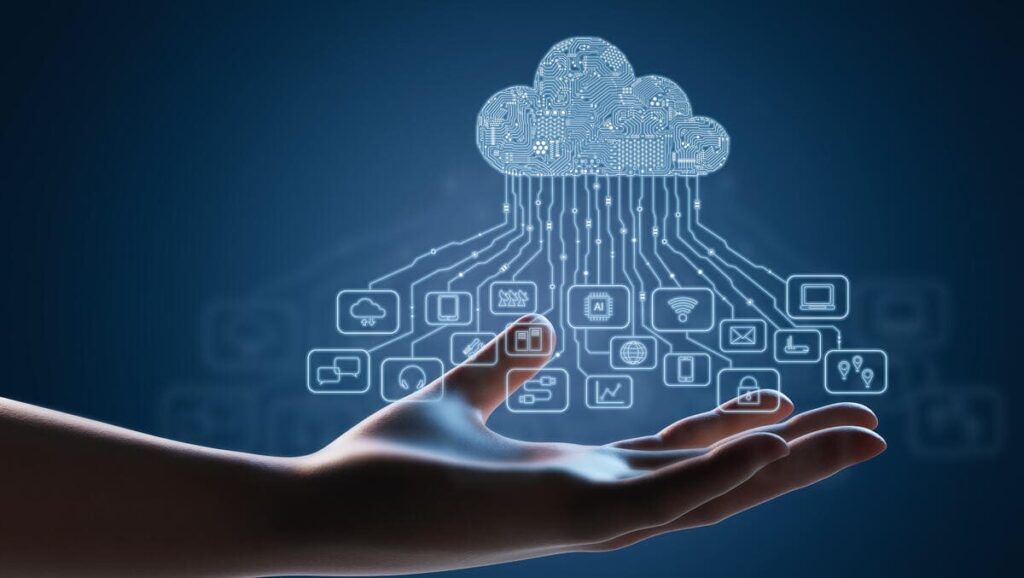
This approach moves the network’s “brain” from a physical box in your server rack to a secure, centralized platform in the cloud. It transforms network administration from a hands-on, device-by-device chore into a streamlined, holistic process managed from a single pane of glass, accessible from anywhere in the world.
The advantages aren’t just incremental, they are transformative — offering unprecedented control, security, and scalability. This transition is about more than just convenience; it’s about future-proofing IT infrastructure to meet the demands of the modern, distributed business world.
A Single Pane of Glass | The Power of Centralized Network Control
One of the most immediate and impactful cloud networking benefits is the introduction of true centralized network control. In a traditional setup, managing a network across multiple sites is a logistical nightmare. An IT administrator might have to use different tools to manage the firewall at headquarters, the switches at a branch office, and the wireless access points at a new retail location. Making a universal change, like updating a security policy or creating a new Wi-Fi network for guests, would require logging into dozens of separate devices, one by one. This process is not only time-consuming but also dangerously prone to human error.
Cloud-based network management completely dissolves these barriers. It consolidates the configuration, monitoring, and management of every network device — regardless of its physical location — into a single, intuitive web-based dashboard.
From this one portal, we can see the health of the entire network, push configuration changes to thousands of devices simultaneously, and enforce consistent policies across the whole organization with just a few clicks. It’s the difference between calling each employee individually to share a message and sending a single company-wide email.
This level of unified control dramatically simplifies administration, reduces the chance of misconfiguration, and frees up valuable IT resources to focus on strategic initiatives instead of manual, repetitive tasks. For organizations with a distributed workforce or multiple locations, this capability is not just a feature; it’s a fundamental game-changer.
Scaling at the Speed of Business | True Network Scalability Solutions
Business growth should be a reason for celebration, not a source of IT anxiety. In the on-premises world, scaling the network is a slow and capital-intensive process. Opening a new office or expanding an existing one requires purchasing new hardware controllers, shipping them to the site, and sending a technician to physically install and configure everything.
This process can take weeks or even months, creating a significant bottleneck that can stall business initiatives. The hardware itself has performance limits, and as the network grows, you may need to undertake a costly “forklift upgrade” to replace an overburdened central controller.
This is where network scalability solutions powered by the cloud truly excel. With a cloud-managed architecture, adding a new location is as simple as shipping new switches or access points to the site, plugging them in, and having them automatically connect to the cloud for their configuration.
A new branch office can be brought online in a matter of hours, not weeks. There are no physical controllers to worry about because the management intelligence resides in the cloud, which has virtually limitless capacity. This provides incredible business agility, allowing the network to grow in lockstep with the organization.
This “zero-touch provisioning” model is a cornerstone of modern networking, offering elastic scalability that traditional hardware simply cannot match and representing a key step in future-proofing IT infrastructure.
A Proactive Shield | Achieving Enhanced Network Security
A common hesitation for businesses considering the cloud is a concern about security. However, this is largely based on outdated perceptions. A modern, well-architected cloud platform offers a level of enhanced network security that is difficult and expensive for most individual businesses to achieve on their own. Cloud networking vendors have entire teams of security experts dedicated to identifying threats and protecting the platform, providing a level of expertise that extends to every client on their network.
One of the most significant security advantages is the automation of updates. In a traditional network, firmware updates and security patches for hundreds or thousands of devices must be manually downloaded and applied by the IT team. This is a tedious process that is often delayed, leaving critical vulnerabilities exposed.
With cloud-based network management, security patches can be tested by the vendor and then automatically rolled out to every device across the network, an essential component of proactive network maintenance — a profound improvement in security posture.
Furthermore, advanced security features like intrusion detection systems, content filtering, and malware protection are often integrated directly into the cloud platform. Security policies are enforced consistently everywhere, from the corporate headquarters to a remote employee’s home office, guaranteeing a uniform and robust defense against modern cyber threats.
Doing More with Less | How to Achieve Reduced IT Overhead
Every dollar and every hour spent on routine network maintenance is a resource that could have been invested in innovation. One of the most compelling arguments for moving to cloud-based management is the significant opportunity for reduced IT overhead. This reduction comes in several forms, impacting both capital expenditures (CapEx) and operational expenditures (OpEx).
First, the need to purchase, license, and maintain expensive on-premises hardware controllers is eliminated. This upfront cost savings can be substantial, especially for organizations with multiple sites that would have required a controller at each location. Second, the operational workload on the IT team is drastically lightened. The time once spent traveling to remote sites for deployments or troubleshooting is reclaimed. The hours dedicated to manually updating device firmware are given back.
The automation of routine tasks and the simplification of management through a central dashboard mean a smaller team can manage a much larger and more complex network far more effectively. This allows IT professionals to transition from being reactive “firefighters” to proactive strategists, a shift that benefits the entire organization. When we factor in the reduced costs associated with power, cooling, and physical rack space, the financial case for cloud management becomes overwhelmingly positive.
Unprecedented Insight | Remote Network Monitoring and Analytics
You can’t manage what you can’t see.
A persistent challenge with traditional networks is a lack of deep visibility. When a user complains about a slow application or poor Wi-Fi, troubleshooting is often a guessing game. IT teams must manually collect data from various sources to piece together what might be happening.
With cloud-based management, remote network monitoring is built into the very fabric of the platform. Every packet of data, every client connection, and every device’s health status is streamed to the cloud in real-time.
This creates a rich, historical data set that can be accessed from anywhere, at any time. If a user reports an issue from last Tuesday, an administrator can effectively “rewind the tape” to see exactly what was happening on the network at that moment.
This capability for remote network monitoring dramatically accelerates troubleshooting and reduces the mean time to resolution (MTTR). It allows for proactive network maintenance by setting intelligent alerts that can notify IT of a potential issue, like a failing switch or a congested uplink, long before users are impacted.
Data-Driven Decisions | The Value of Network Visibility and Analytics
Beyond simple monitoring, the true power of the cloud lies in its ability to turn raw network data into actionable business intelligence. Modern platforms provide sophisticated network visibility and analytics tools that offer deep insights into how the network is being used. Through an intuitive dashboard, we can visualize application traffic, identify the most bandwidth-intensive clients, analyze wireless coverage and performance, and track user behavior patterns over time.
This information is invaluable for strategic planning. Are employees using unsanctioned, high-risk applications? The analytics will show it. Is the guest Wi-Fi in a retail store being used to its full potential? We can track engagement and dwell times. Is a critical business application underperforming due to network latency? We can pinpoint the exact source of the bottleneck.
Our data-driven approach means we can optimize network performance, justify infrastructure investments, and make informed decisions that align IT resources directly with business objectives. It elevates the network from a simple utility to a strategic asset that provides valuable insights. This is one of the most powerful cloud networking benefits available today.
Call on Intelinet
The shift to cloud-based network management represents a fundamental advancement in how we build, operate, and secure our IT infrastructure. Moving away from the rigid, complex, and costly on-premises model is no longer a question of “if,” but “when.” The advantages are simply too compelling to ignore.
The ability to manage your entire distributed network through a single pane of glass provides unmatched centralized network control and operational simplicity. The elastic nature of the cloud offers true network scalability solutions, allowing your infrastructure to adapt and grow seamlessly with your business.
Furthermore, this modern approach delivers enhanced network security through automated updates and consistent policy enforcement, while dramatically reduced IT overhead frees up critical resources for innovation. With the deep insights provided by remote network monitoring and powerful network visibility and analytics, we can move from a reactive state to one of proactive, data-driven management.
By embracing the cloud, we are not just adopting a new technology; we are adopting a new philosophy that prioritizes agility, intelligence, and efficiency, effectively future-proofing IT infrastructure for the challenges and opportunities of tomorrow.
Ready to simplify your network management, enhance your security, and unlock the power of the cloud? Contact the experts at Intelinet today for a comprehensive network assessment and discover how we can modernize your infrastructure.
Frequently Asked Questions
Q. What is cloud-based network management?
Cloud-based network management is a centralized approach to administering a network where the management and control functions are hosted in the cloud. This allows administrators to configure, monitor, and troubleshoot all network devices (routers, switches, access points) from a single web-based dashboard, regardless of their physical location.
Q. Is cloud-based network management secure?
Yes, it is highly secure. Reputable cloud networking platforms invest heavily in security, often exceeding the capabilities of individual businesses. Key security benefits include automated firmware and security patch deployment, centralized and consistent security policy enforcement, advanced threat intelligence, and secure, encrypted communication channels between the network devices and the cloud.
Q. How does cloud management help businesses with multiple locations?
It dramatically simplifies multi-site management by providing a single dashboard to control the entire network. An administrator can view the status of all locations, push configuration changes to all devices simultaneously, and troubleshoot remote issues without needing to travel on-site. This “zero-touch provisioning” also allows new sites to be brought online quickly and efficiently.
Q. Can I integrate my existing network hardware with a cloud management platform?
This depends on the vendor. Many cloud-based network management solutions are designed to work exclusively with the vendor’s own hardware to guarantee seamless integration and full feature support. However, some platforms offer limited monitoring or management capabilities for third-party devices. It is best to plan for a unified hardware and management platform to realize the full benefits.